
Commercial solar panel installers in Clitheroe
Clitheroe is the principal Ribble Valley market town and its commercial base has shifted decisively towards food, agri-processing and specialist rural manufacturing over the last decade. Salthill Industrial Estate on the northern edge of the town anchors the mature engineering and distribution stock, Link 59 Business Park at Barrow near the A59 covers the modern speculative light-industrial and food-manufacturing footprint, and the BB7 hinterland picks up substantial dairy, quarrying-services and Forest of Bowland AONB-fringe rural business activity. Electricity North West's Clitheroe primary carries genuine rural headroom.
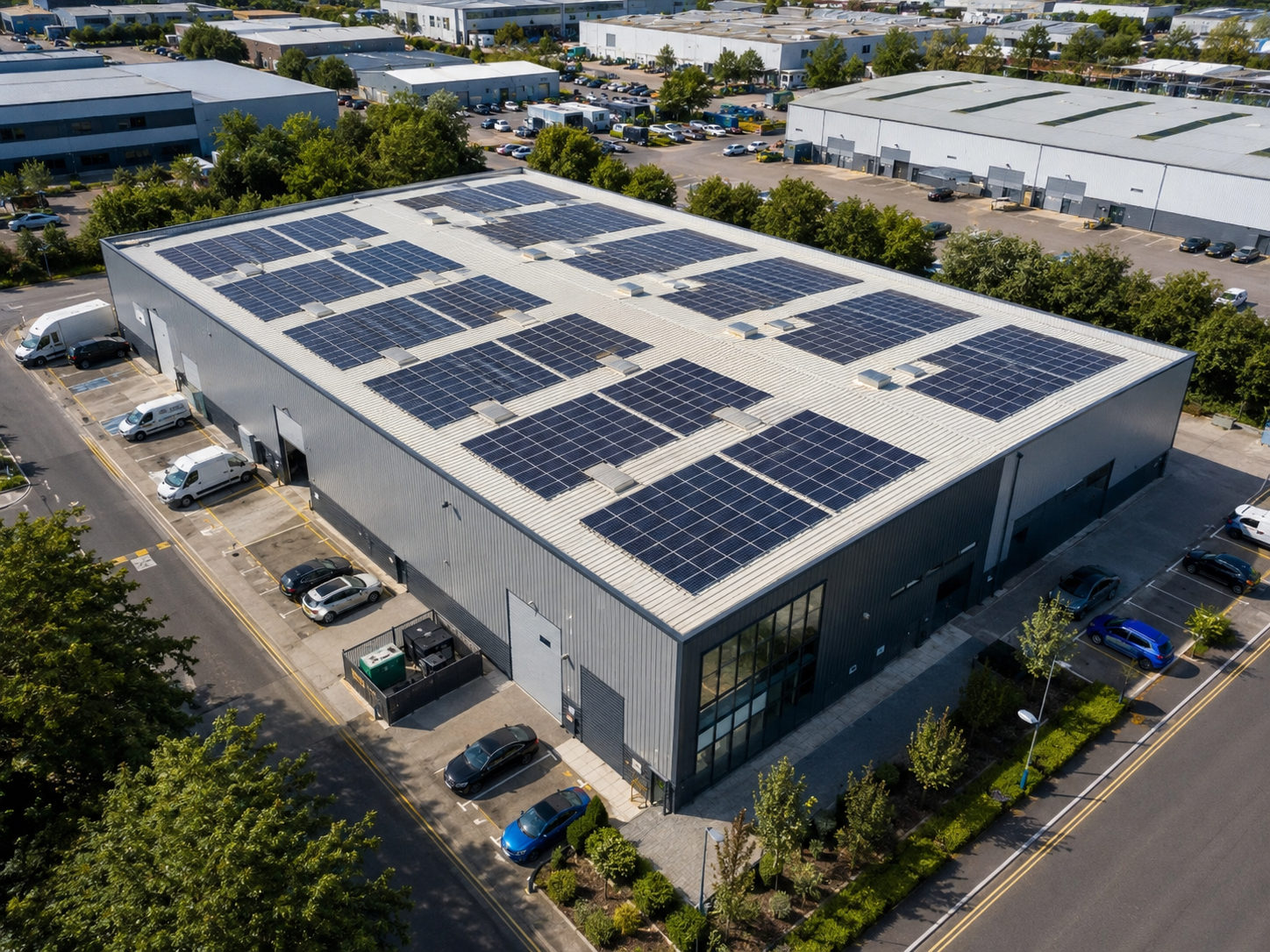
Is your Clitheroe site a fit for commercial solar?
Enter your business postcode - we'll confirm we cover the area and take you straight to the calculator with your location prefilled.
Best-fit sectors in Clitheroe
- Salthill Industrial Estate engineering and distribution
- Link 59 Business Park food-manufacturing and light-industrial
- Ribble Valley dairy and agri-processing
- Forest of Bowland AONB-fringe rural manufacturing
Solar yield
Clitheroe sits in the North West & Yorkshire irradiance band - roughly 900–960 kWh per kWp per year - still highly viable - large rooftops more than offset the irradiance gap vs the south.
Areas we cover near Clitheroe
Barrow · Whalley · Sabden · Chatburn · Waddington · West Bradford · Longridge (edge)
Postcodes: BB7
Funding for Clitheroe businesses
Ribble Valley Borough Council business-support grants, Lancashire Enterprise Partnership legacy Growth Hub instruments, DEFRA Farming Investment Fund for agri-food capex across the Ribble Valley, UK Shared Prosperity Fund Lancashire allocation, and the UK-wide 100% Annual Investment Allowance all apply across BB7.See UK grants & funding guide →
Run the numbers for your Clitheroe site
Get an indicative system size, savings and payback for a commercial site in Clitheroe.Open the calculator →
Commercial solar by sector in Clitheroe
Based on the dominant industries across Clitheroe, these are the commercial solar specialisms most relevant locally - with the typical site profile for each.
Factories & Manufacturing solar in Clitheroe
Heavy daytime load and process heat - fast payback on industrial roofs. In Clitheroe that means salthill industrial estate engineering and distribution and link 59 business park food-manufacturing and light-industrial and ribble valley dairy and agri-processing and forest of bowland aonb-fringe rural manufacturing - sites we survey regularly across BB7 and the surrounding North West & Yorkshire patch.
- Typical system size
- 300 kWp - 1.5 MWp
- Typical payback
- 3 - 4 years
- On-site self-consumption
- 80 - 95%
Indicative figures for well-matched UK sites - your feasibility review models your actual roof, demand and tariff.
See the full factories & manufacturing guide →Cold Storage & Food Production solar in Clitheroe
24/7 refrigeration load matches solar generation profile. In Clitheroe that means link 59 business park food-manufacturing and light-industrial and ribble valley dairy and agri-processing - sites we survey regularly across BB7 and the surrounding North West & Yorkshire patch.
- Typical system size
- 250 kWp - 1 MWp
- Typical payback
- 2.5 - 3.5 years
- On-site self-consumption
- 85 - 95%
Indicative figures for well-matched UK sites - your feasibility review models your actual roof, demand and tariff.
See the full cold storage & food production guide →Warehouses & Logistics solar in Clitheroe
Large flat roofs, high daytime demand - the strongest commercial solar fit. In Clitheroe that means salthill industrial estate engineering and distribution - sites we survey regularly across BB7 and the surrounding North West & Yorkshire patch.
- Typical system size
- 250 kWp - 1 MWp+
- Typical payback
- 3.5 - 4.5 years
- On-site self-consumption
- 70 - 85%
Indicative figures for well-matched UK sites - your feasibility review models your actual roof, demand and tariff.
See the full warehouses & logistics guide →Commercial solar in Clitheroe - FAQs
Does Forest of Bowland AONB status constrain BB7 PV?
For Salthill and Link 59 industrial cores, no - both sit outside the AONB boundary and rooftop PV runs as permitted development. Sites in the AONB proper (northern BB7 out towards Slaidburn and the Trough of Bowland) need a full planning application with an AONB Management Plan-aligned landscape statement.
Are Link 59 roofs typically PV-ready?
The 2010s speculative stock at Link 59 uses standing-seam and Kingspan profile ideally suited to non-penetrative clamp systems. Warranty re-endorsement runs cleanly on the two-page installer sign-off.
Do Ribble Valley dairy processors suit rooftop PV?
Very well - refrigeration, pasteurisation and CIP hot-water carry sustained daytime baseline demand and self-consumption sits in the high 80s of percent. On-farm and processing PV enquiries have grown sharply on the back of DEFRA Farming Investment Fund calls.
How does Electricity North West handle BB7 G99?
Sub-500 kWp with export limitation typically completes acceptance inside 10–14 weeks on the Salthill and Link 59 feeders. The Clitheroe primary carries genuine rural headroom and 1 MWp arrays remain workable via Design Variation.
What yield does a BB7 rooftop deliver?
Around 910–950 kWh per kWp per year on shallow east-west arrays and up to around 970 on a south-facing pitch. Ribble Valley altitude and Pennine-fringe cloud trim summer peaks but annualised generation is competitive with the wider north-west.
Clitheroe is part of our North West & Yorkshire commercial solar service area. See the North West & Yorkshire regional guide →