
Solar panels for leisure centres and sports clubs
Swimming pools, showers, floodlights, air handling and long opening hours give leisure centres and sports clubs some of the highest energy bills of any building. Solar on the roof, car park or spare land puts that demand to work and cuts costs for years.
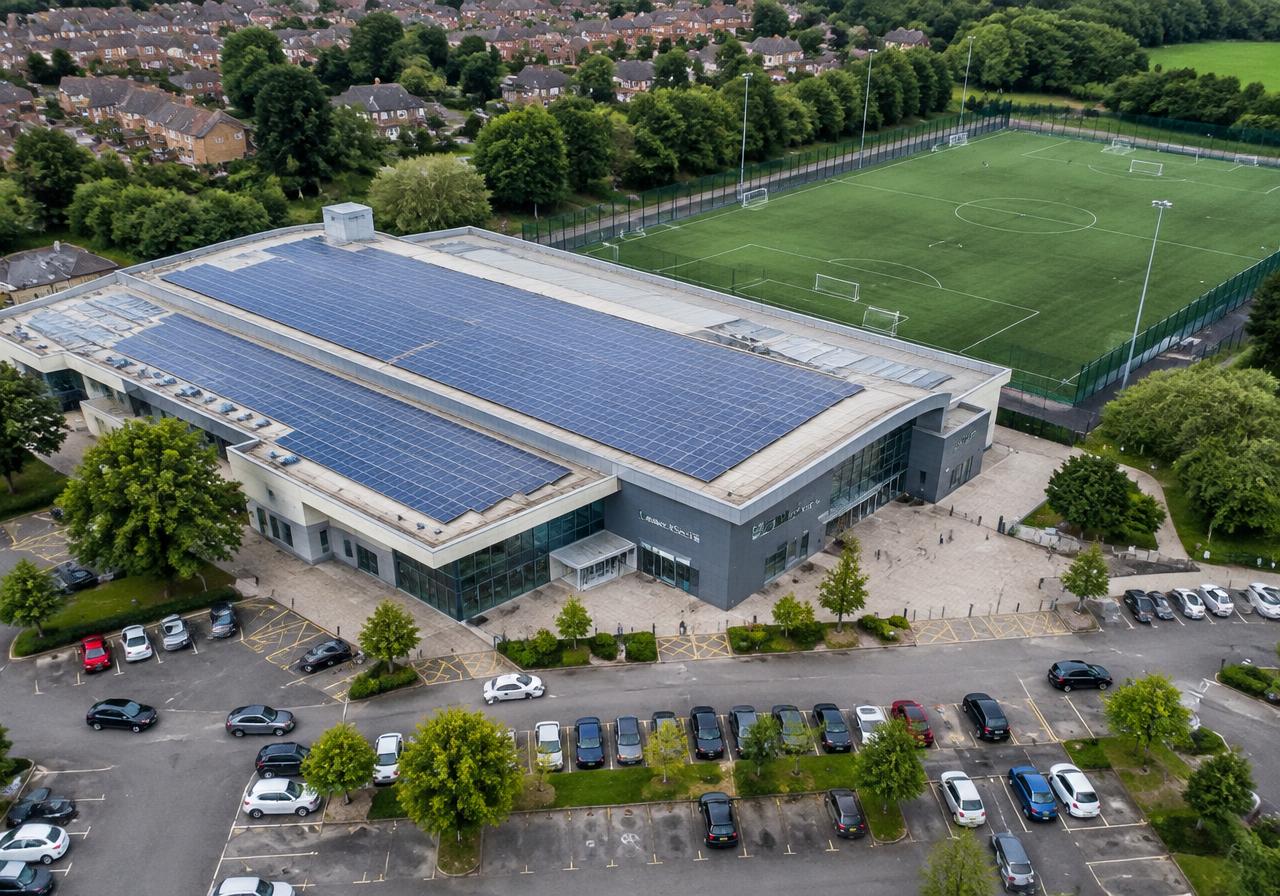
Common challenges
- Pool heating, pumps and hot water running every day of the year
- Floodlight, bar and kitchen costs eating into club income
- Council and trust net-zero targets with tight capital budgets
- Energy price rises passed straight into membership fees
Why solar can work well
- High daytime use from pools, HVAC and lighting means most solar power is used on site
- Large flat roofs, sports halls and car parks suit big arrays or canopies
- Batteries shift daytime power to evening training and floodlights
- Pairs with heat pumps to heat pools and showers more cheaply
- Visible sustainability for members, sponsors and the local community
Installs are planned around opening hours, swimming lessons and match days, with roof work kept away from public areas.
Finance angle
Run the numbers
How we can support different leisure sites
Example only. These are illustrative ranges, not quotes. Your feasibility review uses your own bills, roof and opening hours.
Council leisure centre with pool
Example onlyPool pumps, heating, showers and HVAC run 14+ hours a day, so most solar power is used on site.
- System size
- 150-400 kWp
- Indicative cost
- £135k-£360k
- Typical saving
- £28k-£70k a year
- Payback
- 4-7 years
Private gym or health club
Example onlyFlat, high demand from air handling, lighting and equipment. 24-hour clubs use nearly all they generate.
- System size
- 40-150 kWp
- Indicative cost
- £38k-£145k
- Typical saving
- £8k-£28k a year
- Payback
- 4-6 years
Amateur sports club with clubhouse
Example onlyFootball, cricket and rugby clubs with bar, kitchen and changing rooms. A battery stores daytime power for evening floodlights and training.
- System size
- 15-50 kWp
- Indicative cost
- £15k-£50k
- Typical saving
- £3k-£9k a year
- Payback
- 5-8 years
Golf, tennis or bowls club
Example onlyClubhouse, catering, buggy charging and indoor courts. Ground-mount or car-park canopies suit sites with spare land.
- System size
- 30-100 kWp
- Indicative cost
- £28k-£95k
- Typical saving
- £6k-£18k a year
- Payback
- 5-7 years
Funding solar for leisure centres and sports clubs
Power Purchase Agreement (PPA)
£0 upfront. A funder installs and owns the system, and you buy the power at a fixed rate below your current tariff. Popular with leisure trusts that want savings without capital spend.
Public-sector loans and grants
Council-owned centres and leisure trusts may be able to use Salix-administered schemes or the Public Sector Decarbonisation Scheme when a round is open. Check current eligibility and deadlines before planning around them.
Sport and community grants
Community sports clubs sometimes fund solar through Sport England or Sport Scotland / Sport Wales facility funds, local council or lottery community funds, or community energy groups. Funds open and close, so we check what applies to your club.
Full Expensing and asset finance
Private gyms and limited-company clubs can usually deduct the full cost of qualifying plant in year one, or spread the cost with asset finance repaid from savings. Confirm with your accountant.
More detail: solar grants and funding, how a PPA works.
Pools, batteries and EV charging
Pools are often the biggest single energy cost. Pairing solar with air-source heat pumps and pool covers can cut heating costs sharply, while a battery stores midday power for evening classes and floodlit training. Members' car parks are a good place for solar canopies and EV chargers, which can earn income as well as save energy.
Further reading
Sector FAQs
Are solar panels worth it for a leisure centre?
Usually, yes. Pools, showers and HVAC run all day, so a leisure centre uses most of the power it generates. Typical paybacks are 4-7 years, and a PPA can make savings start with no upfront cost.
Can a small sports club afford solar?
Many can. A 15-50 kWp clubhouse system often costs £15k-£50k, and clubs combine savings, community grants or finance to cover it. We give you a free review first so the committee can see the numbers.
Can solar heat a swimming pool?
Solar panels can power heat pumps that heat the pool very efficiently, and the same power covers pumps, lighting and showers. We assess pool heating as part of the review.
Will the installation disrupt members?
Work is scheduled around opening hours, lessons and fixtures, with scaffold and lifting zones kept away from public areas. Most roof installs take 2-6 weeks on site.
Our club leases its ground - can we still have solar?
Often, yes, with the landlord's or council's consent. We help you check lease terms, roof condition and grid connection before you commit.