
Commercial solar for Stoke-on-Trent ceramics, manufacturing and distribution
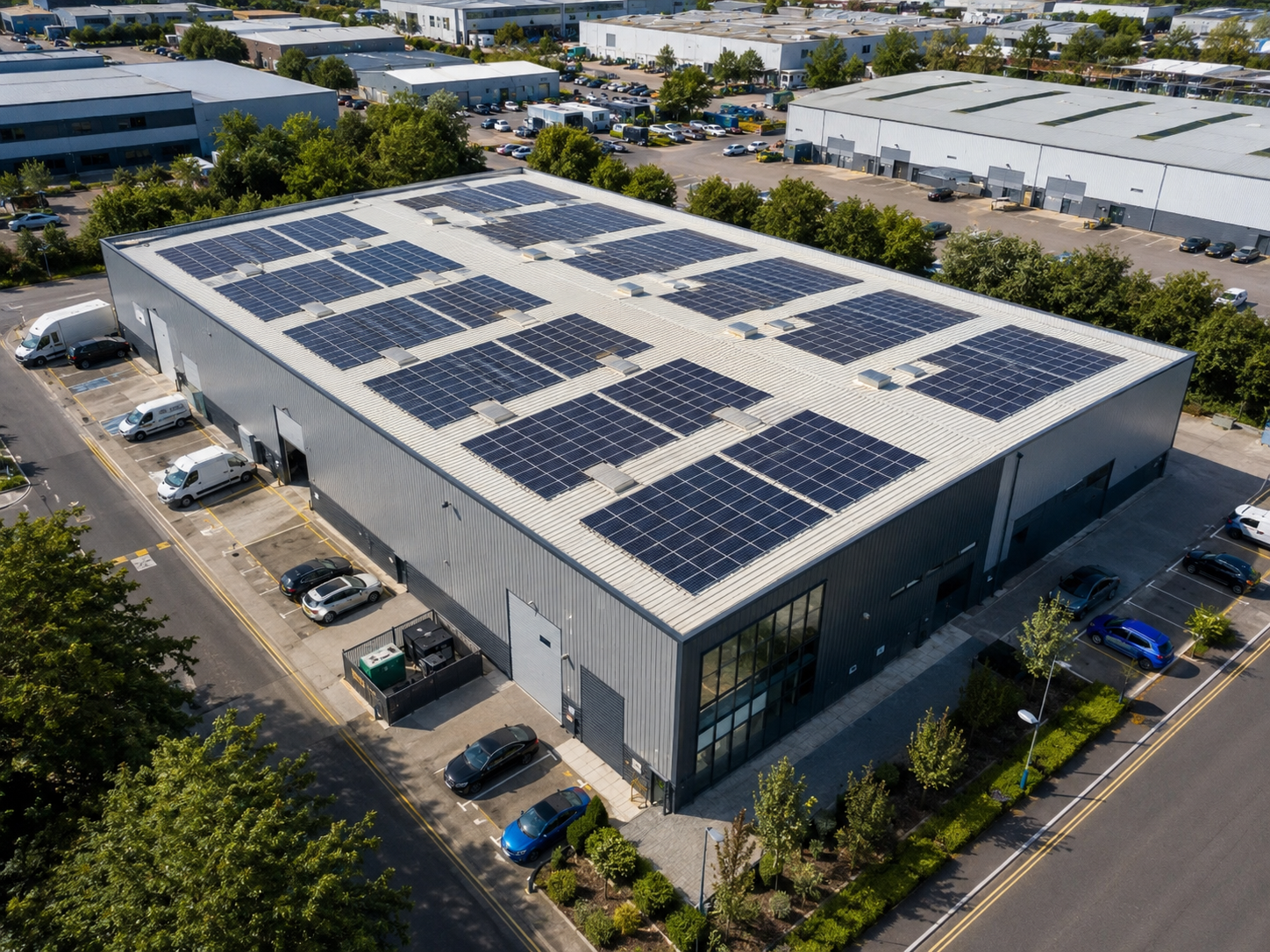
The Potteries is famous for kilns, and kilns are famous for energy bills. While gas still fires most of them, the glazing, decorating, packing and warehouse operations around them run on electricity all day - and Stoke's distribution parks along the A50 and M6 add a lot of big, solar-ready roof space.
Connecting solar to the Stoke-on-Trent network
Network operator: National Grid Electricity Distribution (West Midlands)
Stoke-on-Trent is on National Grid Electricity Distribution's West Midlands network. Large export systems can face longer waits in parts of Staffordshire, so most projects here are designed to supply the building first, with export capped to what the network accepts quickly.
Expected yield in Stoke-on-Trent: roughly 950–1,000 kWh per kWp per year - strong UK commercial solar yield, especially on large flat or shallow-pitch roofs.
Industrial estates and business parks we cover in Stoke-on-Trent
Etruria Valley
Mixed manufacturing and trade buildings close to the city centre.
Trentham Lakes
Modern distribution and light industrial units off the A50.
Lymedale Business Park (Newcastle-under-Lyme)
Distribution and manufacturing units with long roof runs.
Ceramic Valley Enterprise Zone sites
Regeneration sites with newer buildings, including Chatterley Valley.
Also covering Hanley, Burslem, Longton, Fenton, Etruria Valley, Trentham Lakes, Sideway, Newcastle-under-Lyme, Stafford · Postcodes ST1, ST2, ST3, ST4, ST5, ST6, ST7, ST8
Why solar suits Stoke-on-Trent's key sectors
Ceramics and tableware
Electric kilns, decorating lines, dryers and packing all run in daylight. As more firms trial electric firing, on-site generation becomes more valuable.
Distribution and parcels
Stoke's central position means large warehouses with conveyors and lighting load during the day - ideal for big arrays.
Food and drink
Bakery and food production sites in North Staffordshire run refrigeration around the clock, keeping self-consumption high.
What a Stoke-on-Trent project could look like
A 10,000 m² ceramics factory with electric decorating kilns.
- System size
- 400 kWp
- Installed cost
- about £320,000
- Bill saving
- about £68,000 a year
- Payback
- about 4.7 years
Assumes around 950 kWh per kWp, 85% used on site and a 21p/kWh unit rate. Your feasibility review models your own roof, demand and tariff.
Run your own numbersWays to pay for solar in Stoke-on-Trent
- Funded PPA - no capital outlay for energy-intensive manufacturers watching cash flow.
- Full Expensing on owned systems.
- Staffordshire and Stoke-on-Trent business support schemes may offer energy audits; availability changes, so check first.
Schemes change often - always check eligibility before relying on any grant or relief.
Stoke-on-Trent commercial solar questions
Can solar run an electric kiln?
It can contribute during the day, but a large kiln needs more than the roof can produce. Solar works best alongside it, reducing what you buy from the grid.
Do I need planning for solar on an old pottery building?
Some historic pottery buildings in Stoke are listed or in conservation areas, so they need consent. Modern industrial units are normally permitted development.
How much roof do I need?
Around 1,000 m² of usable roof for every 100 kWp. Most Stoke industrial units can take 100 kWp or more.
Is a battery worth it for a ceramics site?
If kilns or dryers run into the evening, a battery can shift midday surplus into those hours. We model both options.
What happens to surplus power at weekends?
It can be exported for a payment through a Smart Export Guarantee tariff, subject to grid approval.
Other major cities we cover
Stoke-on-Trent is part of our Midlands service area. See the Midlands guide →
Ready to see whether your roof could reduce your energy bills?
Explore related pages
- Commercial solar in StaffordshireRegional funding, yield and coverage.
- Commercial solar in BirminghamNearby in West Midlands.
- Commercial solar in NottinghamNearby in East Midlands.
- Commercial solar in LeicesterNearby in East Midlands.
- Solar potential by postcodeSee local solar yield for your business postcode.
- Commercial solar cost guideIndicative UK prices per kWp and what drives them.