
Commercial solar panel installers in Spalding
Spalding is the operational capital of the UK fresh-produce and prepared-foods industry - Bakkavor's Spalding cluster is one of the largest chilled-food manufacturing footprints in Europe, the surrounding PE11/PE12 Fens hold the highest concentration of commercial glasshouse and packhouse growers in the UK (bulbs, brassicas, salad, root crops), and Bourne Road / West Marsh Road carry the mature light-industrial supply chain. Fenland silt soils and the Wash-basin flat topography give Spalding the highest solar irradiance in Lincolnshire. NGED's Spalding 132/33 kV is materially constrained west of the town, so early G99 engagement is essential.
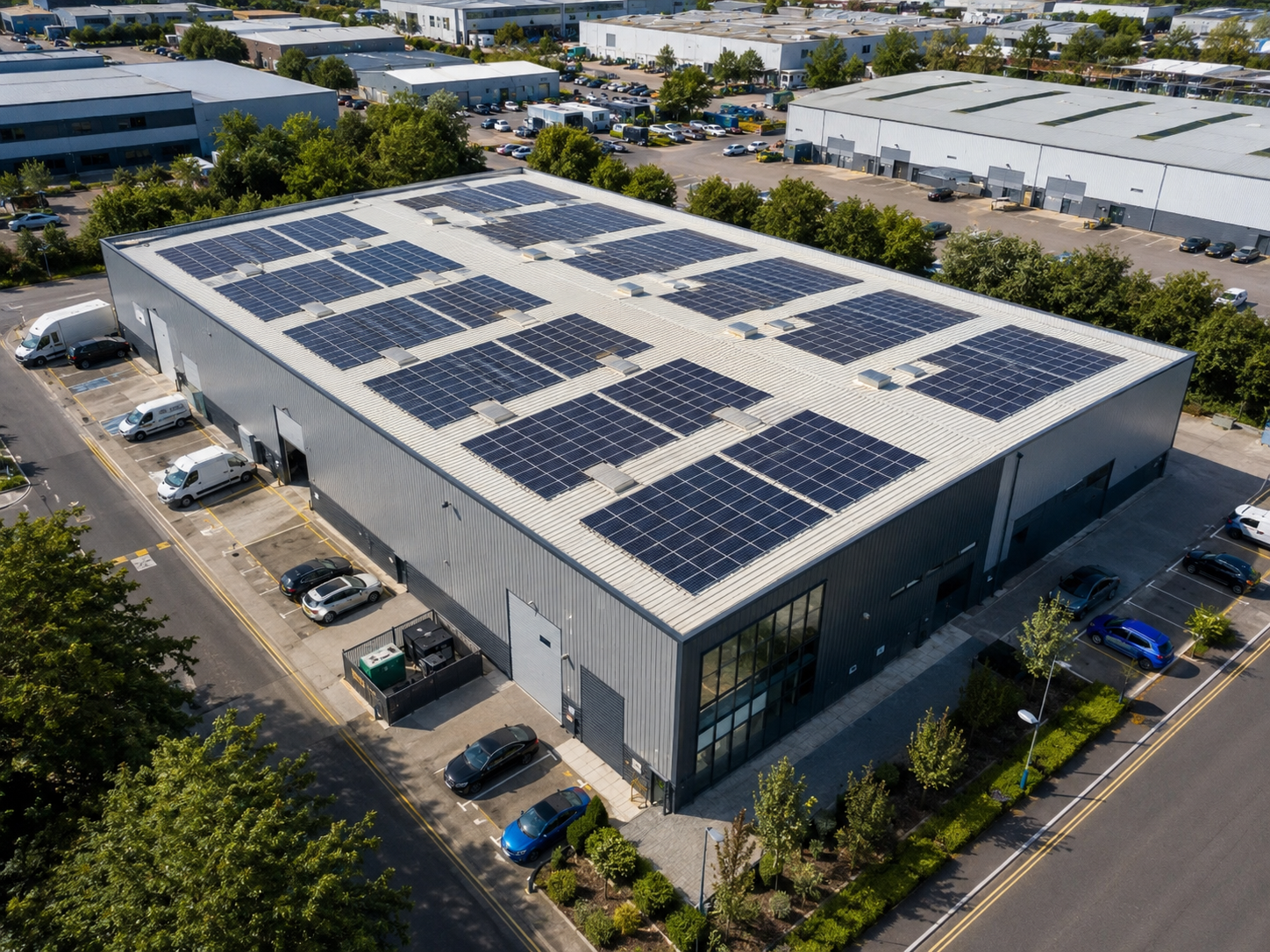
Is your Spalding site a fit for commercial solar?
Enter your business postcode - we'll confirm we cover the area and take you straight to the calculator with your location prefilled.
Best-fit sectors in Spalding
- Bakkavor chilled prepared-foods manufacturing
- Fenland glasshouse growing and salad packhousing
- Bulb and horticulture production (Taylors Bulbs, Kings Lynn Fresh Produce)
- Bourne Road light-industrial and cold-chain logistics
Solar yield
Areas we cover near Spalding
Pinchbeck · Weston · Moulton · Long Sutton · Holbeach · Sutton Bridge · Crowland
Postcodes: PE11, PE12
Funding for Spalding businesses
Run the numbers for your Spalding site
Commercial solar by sector in Spalding
Based on the dominant industries across Spalding, these are the commercial solar specialisms most relevant locally - with the typical site profile for each.
Factories & Manufacturing solar in Spalding
Heavy daytime load and process heat - fast payback on industrial roofs. In Spalding that means bakkavor chilled prepared-foods manufacturing and bourne road light-industrial and cold-chain logistics - sites we survey regularly across PE11 and the surrounding East of England patch.
- Typical system size
- 300 kWp - 1.5 MWp
- Typical payback
- 3 - 4 years
- On-site self-consumption
- 80 - 95%
Indicative figures for well-matched UK sites - your feasibility review models your actual roof, demand and tariff.
See the full factories & manufacturing guide →Cold Storage & Food Production solar in Spalding
24/7 refrigeration load matches solar generation profile. In Spalding that means bakkavor chilled prepared-foods manufacturing - sites we survey regularly across PE11 and the surrounding East of England patch.
- Typical system size
- 250 kWp - 1 MWp
- Typical payback
- 2.5 - 3.5 years
- On-site self-consumption
- 85 - 95%
Indicative figures for well-matched UK sites - your feasibility review models your actual roof, demand and tariff.
See the full cold storage & food production guide →Warehouses & Logistics solar in Spalding
Large flat roofs, high daytime demand - the strongest commercial solar fit. In Spalding that means bourne road light-industrial and cold-chain logistics - sites we survey regularly across PE11 and the surrounding East of England patch.
- Typical system size
- 250 kWp - 1 MWp+
- Typical payback
- 3.5 - 4.5 years
- On-site self-consumption
- 70 - 85%
Indicative figures for well-matched UK sites - your feasibility review models your actual roof, demand and tariff.
See the full warehouses & logistics guide →Commercial solar in Spalding - FAQs
Does NGED capacity constrain large PV at Spalding?
West-of-town yes - the Spalding 132/33 kV grid supply point is materially constrained, so multi-MWp arrays trigger a full network study and typically 12–18 month timelines with either constrained export or a curtailment agreement. Sub-500 kWp with export limitation still clears in 8–12 weeks on most PE11/PE12 feeders.
Are Fenland glasshouse roofs PV-suitable?
The glass itself isn't - but the packhouses, cold stores and grading sheds adjacent to every commercial glasshouse operation absolutely are, typically 1990s+ profile-metal decks with substantial daytime refrigeration and pumping loads that push self-consumption into the 80s of percent.
How does Bakkavor's Scope-3 programme flow down to PE11/PE12 suppliers?
Bakkavor publishes SBTi-aligned targets and cascades supplier-level carbon reporting through its procurement platform. On-site PV with export limitation and G99 acceptance is one of the few directly-evidenced Scope-1/2 reduction levers a tier-2 chilled supplier can deliver in a 12-month window.
Does the Fenland peat-shrinkage subsidence issue affect ground-mount PV design?
For ground-mount arrays yes - Fenland peat shrinkage runs 1–3 cm/year and standard driven-pile foundations need extended embedment depth or screw-pile alternatives. For rooftop-only arrays on modern industrial buildings the sub-slab piling was already engineered for it and the array itself is unaffected.
How wide is Spalding coverage?
Pinchbeck, Weston, Moulton, Long Sutton, Holbeach and Sutton Bridge are day-one visits; Boston, King's Lynn, Peterborough, Wisbech and Stamford are on planned survey days from the South Holland base.
Spalding is part of our East of England commercial solar service area. See the East of England regional guide →
Ready to see whether your roof could reduce your energy bills?
Explore related pages
- Commercial solar in LincolnshireRegional funding, yield and coverage.
- Commercial solar in CambridgeNearby in East of England.
- Commercial solar in IpswichNearby in East of England.
- Commercial solar in NorwichNearby in East of England.
- Solar potential by postcodeSee local solar yield for your business postcode.
- Commercial solar cost guideIndicative UK prices per kWp and what drives them.